Call us now :08045475875
 Send Inquiry
 Send Inquiry
Formic Acid
Price 58 INR/ Kilograms
MOQ : 5000 Kilograms
Formic Acid Specification
- Solubility
- Completely miscible with water, ethanol, ether, acetone, and glycerol
- HS Code
- 29151100
- Ph Level
- 1.75 (for 1M solution)
- Density
- 1.220 Gram per cubic centimeter(g/cm3)
- Form
- Clear, transparent, colorless liquid
- Molecular Weight
- 46.03 g/mol
- Poisonous
- Yes
- Storage
- Keep tightly closed in a cool, dry, well-ventilated area, away from heat and sources of ignition. Store apart from oxidizing agents and bases.
- Structural Formula
- HCOOH
- Molecular Formula
- CH2O2
- Taste
- Pungent
- Refractive Rate
- nD 1.3704
- Melting Point
- 8.4C
- Smell
- Pungent, irritating odor
- Shape
- Liquid
- Other Names
- Methanoic Acid, Hydrogen Carboxylic Acid
- Boiling point
- 100.8C
- Purity
- 85%, 90%, 94%, 98%, or as specified
- Classification
- Organic Acid/Inorganic Chemicals
- Chemical Name
- Formic Acid
- CAS No
- 64-18-6
- EINECS No
- 200-579-1
- Grade
- Technical/Industrial grade (also available in higher purities as analytical/reagent grade)
- Standard
- Meets GB/ISO/ASTM quality standards
- Type
- Acid/Organic Acid
- Usage
- Industrial, Agricultural, Laboratory
- Main Material
- Formic Acid (HCOOH)
- Application
- Leather tanning, textile dyeing and finishing, rubber manufacturing, as a preservative and antibacterial agent in livestock feed, in the production of formate esters, pharmaceuticals, agriculture, electroplating, and as a coagulant for rubber latex.
- Shelf Life
- 2 years in original sealed packaging
- Appearance
- Clear, colorless liquid
- Vapor Pressure
- 43 mmHg (at 20C)
- Decomposition
- Decomposes upon heating to produce carbon monoxide, carbon dioxide, and water vapors
- Corrosivity
- Strongly corrosive
- Export Markets
- Worldwide
- Stability
- Stable under recommended storage conditions
- Packing
- Packed in HDPE drums, IBC tanks, or as specified by the client
- Minimum Order Quantity
- As per supplier agreement
- Regulatory Information
- Complies with REACH regulation
- Hazard Class
- 8 (Corrosive) UN No. 1779
- Flash Point
- 69C (closed cup)
- Autoignition Temperature
- 601C
Formic Acid Trade Information
- Minimum Order Quantity
- 5000 Kilograms
- Supply Ability
- 20000 Kilograms Per Day
- Delivery Time
- 7 Days
About Formic Acid
SPECIFICATION
| Usage/Application | Industrial |
| Color | water white |
| Physical State | Liquid |
| Chemical Formula | HCOOH |
| Grade Standard | Industrial Grade |
| Packaging Details | 50 L Drum |
| Purity % | 85% |
| CAS No | 64-18-6 |
| Packaging Size | 35KG, 50KG Drum |
Versatile Industrial Applications
Formic Acid is widely utilized across diverse industries. Its key applications span leather tanning, textile dyeing and finishing, agriculture (as a preservative and antibacterial agent in feed), rubber manufacturing, pharmaceuticals, and as a coagulant for rubber latex. Its strong acid properties make it an essential component in the electroplating and chemical synthesis sectors.
Safe Handling and Storage Guidelines
Due to its strong corrosivity and toxic nature, Formic Acid should be handled with appropriate personal protective equipment. Store the acid in tightly sealed HDPE drums or IBC tanks, in a cool, dry, and well-ventilated area away from heat, bases, and oxidizing agents. This ensures safety and maintains product stability for up to 2 years.
Quality Compliance and Packaging Options
Formic Acid offered meets stringent GB/ISO/ASTM and REACH regulatory standards. It is available in multiple purity grades and is packed according to client needs, typically in HDPE drums or IBC tanks. Minimum order quantities are flexible according to supplier agreements, and the product is exported to markets worldwide.
FAQ's of Formic Acid:
Q: How should Formic Acid be safely stored and handled?
A: Formic Acid must be kept tightly closed in a cool, dry, and well-ventilated area, away from sources of heat, ignition, and incompatible substances like bases and oxidizing agents. Use appropriate personal protective equipment, such as gloves and eye protection, as the acid is strongly corrosive and toxic to skin and mucous membranes.Q: What are common industrial uses of Formic Acid?
A: Formic Acid is commonly used in leather tanning, textile dyeing and finishing, rubber manufacturing, the production of formate esters, electroplating, as a preservative and antibacterial agent in livestock feed, agriculture, pharmaceuticals, and as a coagulant for rubber latex.Q: When can Formic Acid begin to decompose or become unstable?
A: Formic Acid remains stable under recommended storage conditions; however, it decomposes when heated, producing carbon monoxide, carbon dioxide, and water vapors. Avoid exposing the product to high temperatures or open flames to prevent hazardous decomposition.Q: Where is Formic Acid typically supplied and exported from?
A: Formic Acid is supplied and exported worldwide, with major distribution, manufacturing, and supply operations based in India. Packaging and minimum order quantities can be customized as per client and regulatory requirements.Q: What is the recommended process for using Formic Acid in textile dyeing or leather tanning?
A: In textile and leather industries, Formic Acid is introduced during processes that require pH adjustment, dye fixing, or as a reducing agent. Proper dosing and dilution must be ensured to achieve the desired chemical reactions while maintaining safety protocols due to its corrosive nature.Q: How does using Formic Acid benefit agricultural operations?
A: In agriculture, Formic Acid serves as a preservative and antibacterial agent in livestock feed, enhancing shelf life and controlling microbial growth. Its effective antimicrobial properties help maintain feed quality and promote animal health.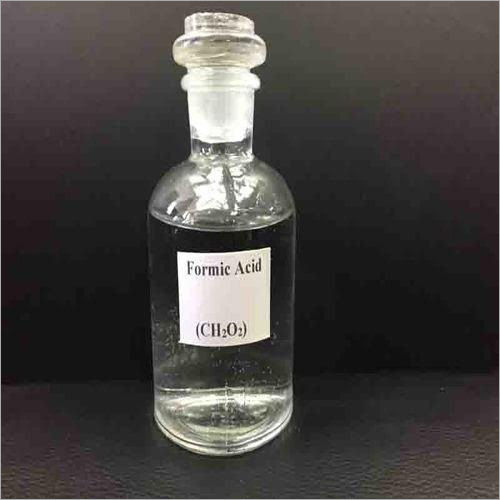
Tell us about your requirement

Price:
Quantity
Select Unit
- 50
- 100
- 200
- 250
- 500
- 1000+
Additional detail
Mobile number
Email

More Products in Acid Category

Acetic Acid
Price 50 INR / Kilograms
Minimum Order Quantity : 5000 Kilograms
Solubility : Miscible with water, alcohol, ether, and glycerol
Standard : Conforms to ASTM/ISO standards as per application
HS Code : 29152100
Density : 1.049 Gram per cubic centimeter(g/cm3)

"We are accepting only bulk order quantity."
 Send Inquiry
Our Products
- Inorganic Chemicals
- Calcium Carbonate Powder 300 Mesh to 3000
- Calcite Powder
- Lime Stone 1-4MM
- Dolomite Powder
- Limestone Chips 2 to 8 MM
- Sodium Sulphate 99 Percent
- Magnesium Sulphate
- Ferrous Sulphate
- Ammonium Sulphate
- Calcium Carbonate Powder Coated
- Acids
- Magnesium Chloride Flakes
- Bleaching Powder
- Quick Lime
- Sulphuric Acid
- Monosodium Phosphate Crystal
- Limestone Lump
- Soda Ash Light
- Technical Grade Pesticides
- Potassium Carbonate Granual & Powder
- White Marble Powder
- Silicone Defoamer
- Sodium Acetate Trihydrate
- Dicalcium Phosphate Granules
- Water Treatment Chemicals
- Aluminium Sulphate
- Acid
- Chemical Powder
- Calcium Carbonate Powder
- Acid Chemical
- Caustic Soda Flakes
- Sodium Sulphate
- Limestone Chips
- Technical Grade Urea
- Industrial Refined Salt
- GACL Hydrogen Peroxide
- Himalayan Rock Salt Lump
- Citric Acid Monohydrate
- Non Ferric Alum
- Limestone
- Ferric And Non Ferric Alum
- Caustic Soda
- Lime Powder
- Rust Converter For Engineering Industry
- Caustic Soda Lye And Soda Flakes
- Hydrogen Peroxide

SURVEY NO 596/7, PLOT NO 07, YOGI ESTATE 4,
JITALI, ANKLESHWAR,Ankleshwar - 393002, Gujarat, India

Mr Shailesh PATEL
(PARTNER)
Mobile :08045475875
 Send Inquiry
 Send SMS
Developed and Managed by Infocom Network Private Limited.
